
How to Start Your 12-Week Fitness Plan as a Beginner
How to Start Your 12-Week Fitness Plan as a Beginner
Easy-to-Follow Basic Routine for Beginners
Stepping into the gym for the first time can be overwhelming. It’s best to start with manageable workouts, around 3 to 4 times a week for 30 to 45 minutes each session. Going too hard too soon can lead to burnout and quitting within a couple of weeks. Focus on full-body workouts with simple exercises like squats, push-ups, and planks. Once you get comfortable, gradually incorporate dumbbell or machine exercises to diversify your routine.
Think of your first 12 weeks in three phases: the first 4 weeks are about building a foundation, the next 4 weeks focus on progress, and the last 4 weeks aim to strengthen. During the initial phase, keep intensity low and prioritize rest—pushing too hard can cause injuries.
Customizing Your Routine Based on Goals
Everyone’s starting point and goals are different—whether it’s improving stamina, building muscle, or shaping your body. Tailor your 12-week plan accordingly:
- For endurance, combine light weights with cardio.
- To build strength, gradually increase weights with compound movements like deadlifts or bench presses.
- For body shaping, mix strength training with cardio sessions.
Remember, rigid routines can be stressful. Be flexible and adjust based on how your body feels, which helps maintain consistency and prevents setbacks. Personal experience has taught me that listening to your body is key.
Consistency is your biggest ally. Adjust your plan gradually, and always prioritize listening to your body's signals.
How to Adjust Workout Intensity and Frequency
Finding the Right Intensity for Beginners
Aim to work out at a level where you can talk comfortably—this is often called the "talk test." If you’re gasping for breath and can’t speak, it’s too intense; if you can sing, it’s too easy. Start with lighter weights and lower intensity, then gradually increase every 1 to 2 weeks as your muscles adapt. This approach reduces injury risk and promotes steady progress.
Balancing Workout Days and Rest
Three to four sessions per week are ideal. More than that can lead to fatigue or injury, especially without proper recovery. Incorporate at least 1 to 2 rest days to allow your muscles and nervous system to recover.
Finding the right balance between activity and rest can be tricky. Even top sports science organizations warn against overtraining, as it can do more harm than good. If you notice signs of fatigue or pain, don’t push through—rest is part of progress.
Remember, slow and steady wins the race. If you feel something’s off, take a break. Pushing through pain only leads to setbacks.
Combining Strength and Cardio for Maximum Results
A Balanced Routine for Both Strength and Endurance
Yes, you can improve both strength and stamina simultaneously. In fact, mixing strength training with cardio accelerates overall fitness gains. A simple plan could be doing strength circuits like squats, push-ups, and deadlifts on Monday, Wednesday, and Friday, with brisk walking or light jogging on Tuesday and Thursday. Over 12 weeks, this approach can boost both your strength and cardiovascular capacity by 20-30%.
Structuring Your Program Effectively
Focus on compound movements—these engage multiple muscle groups and are more effective for beginners. Aim for 3 sets of 8 to 12 reps, adjusting weight as needed. For cardio, 20 to 30-minute sessions, 2 to 3 times weekly, are sufficient.
Alternating between strength and cardio helps you see noticeable changes in both weight and shape, as long as you listen to your body and avoid overexertion.
Always tailor your program to how you feel. I’ve learned the hard way—pushing too hard early on can lead to setbacks like shoulder injuries.
Staying Safe: Proper Technique and Injury Prevention
Mastering Good Form
People often ask, “How can I avoid injuries?” The answer: focus on proper form. Especially for beginners, incorrect technique can strain joints and ligaments more than muscles. Start with light weights and prioritize learning correct posture. Take time to warm up with stretching and mobility exercises—they prepare your body and reduce injury risk. If unsure, ask a trainer or experienced gym buddy to check your form.
Injury Prevention Tips
Don’t rush increasing weight or repetitions. Pay attention to pain or discomfort—these are your body’s signals to stop. Incorporate cool-down stretches after workouts, and ensure you get adequate rest. Consistent, injury-free training depends on these habits.
Remember, injury prevention is about longevity. Missing months due to injury sets back your progress far more than slowing down a bit.
Nutrition and Rest: Enhancing Your Workout Results
Fueling Your Body for Recovery
Nutrition plays a vital role. Protein is essential for muscle repair—aim for a source within 30 to 60 minutes after exercising, like lean meats, dairy, or plant-based options. Carbohydrates replenish energy stores, supporting high-intensity workouts. Staying hydrated is equally important—drink water regularly to prevent dehydration, which can impair muscle function.
Rest and Sleep for Optimal Recovery
Rest isn’t just downtime; it’s when your body rebuilds and gets stronger. Aim for 7 to 8 hours of quality sleep each night, and schedule at least one or two full rest days weekly. If you increase workout intensity, adjust your rest accordingly. Proper recovery is crucial for avoiding burnout and injuries.
Combining good nutrition, sufficient sleep, and tailored rest periods ensures your efforts translate into real gains.
12-Week Beginner Workout Blueprint
The key to success is consistent, gradual progress. Start with light intensity and plenty of rest in weeks 1-4. Increase effort slightly during weeks 5-8 to build strength and stamina. In the final phase, weeks 9-12, push a bit more to solidify gains.
Track your progress, listen to your body, and adjust as needed. For convenience, consider using fitness apps that can help monitor workouts, nutrition, and recovery.
| Weeks | Focus | Workout Examples | Cardio | Rest Days |
|---|---|---|---|---|
| 1-4 | Building a foundation | Squats, push-ups, planks (2-3 sets of 10-12 reps) | 2x/week, 20 min brisk walk | 2-3 days full rest |
| 5-8 | Increasing strength and endurance | Deadlifts, bench presses, lunges (3 sets of 8-10 reps) | 2-3x/week, 25 min jogging | 1-2 days rest |
| 9-12 | Pushing your limits | Barbell squats, pull-ups, overhead presses (3-4 sets of 6-8 reps) | 3x/week, 30 min interval cardio | 1 day rest |
Want to stay on track? Use a fitness app to log your workouts, nutrition, and recovery. It can be a game-changer.
Getting started and sticking with it for 12 weeks may seem tough at first, but don’t rush. Focus on listening to your body and making steady progress. Your body and mind will thank you. And with the right balance of effort, rest, and nutrition, you’ll see real results.
Use tools like fitness apps to help stay organized, and remember—consistency is everything. Your healthier, stronger self is just around the corner!
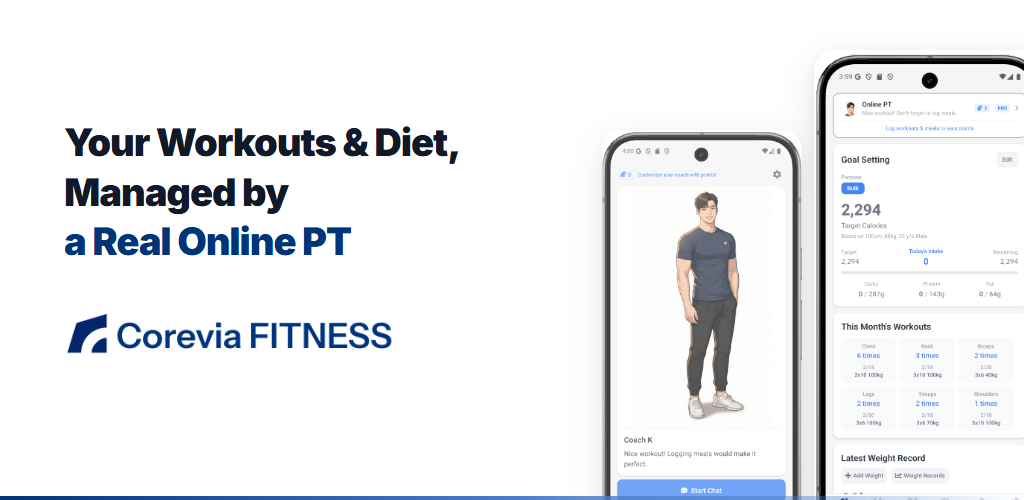
Start your healthy journey with CoreVia Fitness
AI-powered meal tracking, personalized coaching, and more — all in one app.