
Should You Start with Compound or Isolation Exercises? How to Maximize Your Workout Results
Should You Start with Compound or Isolation Exercises? How to Maximize Your Workout Results
Ever wondered whether to prioritize compound or isolation exercises during your workout? Or which one deserves more focus? The truth is, these two types of exercises aren’t rivals—they complement each other. When you first start working out, it’s common to feel confused: “Are compound movements better?” or “Is it okay to only do isolation exercises?” In this guide, I’ll help you understand when each type is most effective, how to combine them, and how to optimize muscle growth and workout efficiency. I’ll share personal experiences, scientific insights, beginner-friendly routines, and common questions—so you get a clear picture.
Real-Life Experience: How Mixing Compound and Isolation Exercises Transformed My Muscle Gains
Progress After 3 Months of Training
When I first started lifting, I relied solely on compound moves like squats, deadlifts, and bench presses. After about three months, I noticed a big difference. These exercises engaged my entire body and burned lots of calories. But I also saw that my arms and shoulders weren’t developing as well as I wanted. So, I added isolation movements like bicep curls and tricep extensions. That’s when I began to see more definition and detail in my muscles.
My Routine: How I Combined Both
I trained three times a week—focusing mainly on compound lifts, then adding isolation exercises on rest days. For example, Mondays and Fridays I did squats, bench presses, and deadlifts. Wednesdays I added bicep curls, lateral raises, and hamstring curls. This balanced approach helped my entire physique develop evenly.
Tailoring Your Workout Based on Your Body and Goals
Your workout should adapt to your body type and goals. Want overall muscle and strength? Focus more on compound lifts. Looking to improve specific areas? Include more isolation work. For instance, if you have a weaker upper body, prioritize chest and back exercises, then add shoulder or arm isolation movements. Adjusting your routine this way makes it more effective.
In my experience, compound exercises build strength and burn calories by engaging multiple joints and muscle groups, while isolation exercises help sculpt specific muscles and aid recovery.
The Science Behind Compound and Isolation Exercises: Understanding Activation & Efficiency
How Compound Movements Activate Muscles
Compound exercises like squats and deadlifts involve multiple muscles and joints simultaneously. They’re great for building overall strength, increasing calorie burn, and improving functional fitness. Scientific studies show that compound lifts activate a broader range of muscles and lead to faster, more balanced gains (source: Journal of Strength and Conditioning Research, 2018).
The Role of Isolation Exercises
Isolation movements target single muscles—think bicep curls or leg extensions. They’re perfect for refining muscle shape, addressing weak spots, and rehab work. Athletes and bodybuilders use these to fine-tune their physique and ensure balanced development (source: Sports Medicine, 2020).
Synergy of Combining Both
Using both types of exercises together creates a powerful synergy. Compound lifts develop overall strength, while isolation work enhances detail and symmetry. A 2021 study found that combining them accelerates muscle growth and reduces injury risk. It’s like painting a picture: compound exercises sketch the outline, and isolation adds the finishing touches.
| Aspect | Compound Exercises | Isolation Exercises |
|---|---|---|
| Muscle Engagement | Multiple muscles, full-body focus | Single muscle, targeted focus |
| Calorie Burn | High | Moderate to low |
| Complexity | More technical, requires skill | Easier to perform |
| Main Goal | Strength, functional fitness | Muscle shaping, rehab |
| Injury Risk | Slightly higher, due to technique | Lower if done correctly |
Think of compound lifts as creating the foundation, with isolation exercises adding the details.
Beginner-Friendly Routine: How to Start with Compound and Isolation Moves
Sample Weekly Plan for Beginners
If you’re new to lifting, start with primarily compound movements. Focus on mastering squats, deadlifts, and bench presses. For example, train three times a week: on the first day, do mostly compound lifts; on the second, sprinkle in some isolation exercises like bicep curls or shoulder raises. Over time, aim for about 80% compound and 20% isolation to build strength and shape muscles simultaneously.
Targeting Major and Minor Muscles
Big muscles like quads, back, and chest respond well to compound lifts. Use squats, pull-ups, and presses for these. For smaller muscles like biceps, triceps, and shoulders, add isolation exercises like curls, extensions, and lateral raises. For example, after squats and bench presses, add tricep pushdowns or lateral raises to complete your workout.
Adjusting Intensity and Recovery
Start with manageable weights—aim for 8-12 reps per set, doing 3-4 sets. Don’t overdo it; give your muscles enough time to recover between sessions. Proper rest is key to muscle growth and avoiding injuries.
Most beginners find that focusing on compound exercises first, then gradually adding isolation movements, leads to balanced growth and sustained progress.
FAQs: Choosing Between Compound and Isolation Exercises
What’s the main difference?
Compound exercises work multiple muscles and joints at once, burning more calories and building overall strength. Isolation exercises target a single muscle, helping improve shape and address weaknesses.
Which is better for muscle growth?
Research shows that combining both yields the best results. Compound lifts develop your base, while isolation fine-tunes individual muscles.
Where should a beginner start?
Start with compound movements—they’re easier to learn and safer for beginners. As you progress, incorporate isolation exercises to enhance specific areas.
Are there risks involved?
Compound lifts require proper technique to avoid injury, especially since they use heavier weights. Isolation exercises are generally safer but can cause imbalances if overused without proper programming.
How do I customize my routine for my goals?
Focus on compound exercises for strength gains. If you want a more sculpted look or to fix weaker spots, add more isolation work. For most, an 80:20 ratio (compound to isolation) is a good starting point; intermediate lifters might shift to 60:40, and advanced athletes, 50:50.
The key is flexibility—adjust your routine based on your goals, body response, and progress.
Remember, compound and isolation exercises aren’t mutually exclusive—they’re best when used together. Beginners should focus on building a solid base with compound lifts, then incorporate isolation to perfect muscle detail and balance. Scientific evidence and real-world experience both support this approach for sustainable muscle growth and injury prevention. Experiment with your routine, find what works best for you, and enjoy the journey.
And don’t forget—use the CoreVia app to track your workouts, plan your meals, and leverage AI coaching and form analysis to boost your results! So, are you ready to craft your perfect workout routine? Mix the best of both worlds and tailor it to your needs!
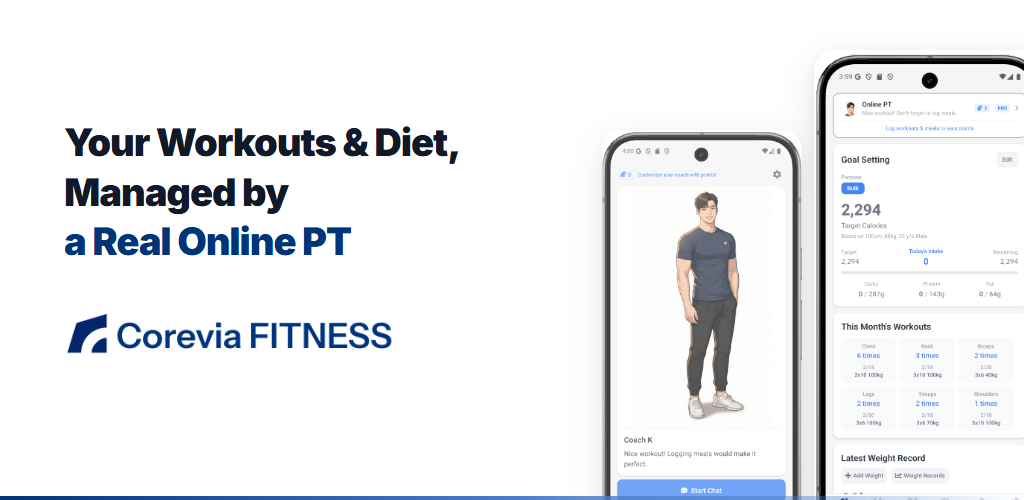
Start your healthy journey with CoreVia Fitness
AI-powered meal tracking, personalized coaching, and more — all in one app.