
Mastering the Perfect Squat: A Practical Guide for Better Form and Fewer Injuries
Mastering the Perfect Squat: A Practical Guide for Better Form and Fewer Injuries
Have you ever struggled with your squat form during workouts? Maybe your knees hurt, or your lower back feels uncomfortable, and you're worried if you're doing it wrong. Squats look simple—a quick bend and stand—but in reality, they involve multiple joints and muscles working together from your ankles to your hips. Maintaining proper technique can be surprisingly tricky, especially if you have tight ankles, muscle imbalances, or habitual poor movement patterns. These issues can lead to discomfort or even injury over time.
Today, I’ll share real experiences, scientific insights, and easy-to-follow routines to help you perfect your squat form. By the end of this guide, you’ll understand why your squat might feel off and how to correct it with practical tips.
Personal Journey: From Struggling to Smarter Squatting
Starting Off with Bad Habits and Pain
When I first learned to squat, I experienced knee pain. My ankles were stiff, causing my knees to drift forward excessively and my heels to lift off the ground. Limited ankle mobility often pushes the knees out, increasing joint strain. Unknowingly, I tried to squat deeper without addressing these issues, which only worsened my discomfort.
Improving Ankle Mobility and Strength
To fix this, I dedicated time to ankle flexibility exercises—like wall ankle mobilizations, where I pressed my knee toward the wall while keeping my heel flat. Doing this consistently, especially under load, directly improved my squat stability. Over time, my knees no longer buckled forward, my heels stayed grounded, and I built confidence. I also noticed muscle imbalances; I focused on unilateral exercises like lunges to strengthen weaker legs and achieve better muscle balance.
Steady Practice and Mindful Corrections
The biggest change was feeling more stable and confident during squats. My knees no longer wobble, my ankles and hips move smoothly, and my lower back feels less strained. These improvements didn’t happen overnight but resulted from consistent ankle mobility work and targeted strength training. Engaging in these routines expanded my ankle’s dorsiflexion—crucial for proper squat mechanics—and improved overall body control (Source: PubMed PMID 22245818).
The Science Behind Proper Squat Technique
Why Ankle Mobility Matters
A good squat hinges on ankle flexibility. To keep your balance and avoid unnecessary stress on your knees and lower back, your ankles need enough dorsiflexion (ability to pull your toes toward your shin). When ankle mobility is limited, your knees tend to shift forward and your body compensates with poor posture.
Research shows that loading your body weight during exercises like wall-assisted ankle mobilizations increases ankle range of motion more effectively than passive stretches alone. This functional stretching helps strengthen supporting ligaments and muscles, leading to better stability (Source: PubMed PMID 22245818).
The Role of Proprioception
Another critical factor is proprioception—the body's awareness of its position. Improving ankle proprioception means you can better sense where your foot and ankle are in space, which enhances balance and reduces wobbling during squats. Exercises like standing on unstable surfaces—such as balance pads or foam rollers—especially with eyes closed, activate these sensory receptors and boost ankle stability over time.
Addressing Muscle Imbalances
Muscle imbalances, like one leg being weaker than the other, can throw off your squat. Instead of just doing side-to-side reps, targeted unilateral exercises like lunges or Bulgarian split squats are more effective for correcting these discrepancies because they activate muscles independently and promote balanced strength development.
The key to better squats: improve ankle mobility under load, enhance proprioception on unstable surfaces, and use unilateral exercises to correct imbalances.
Easy & Effective Routine: Fix Your Squat Step-by-Step
Improving Ankle Flexibility
Start with ankle stretches that you can do daily. For example, stand facing a wall, place one foot about a foot away, and gently push your knee toward the wall while keeping your heel on the ground. Hold for 30 seconds and repeat 3 times per leg. Doing this consistently for 5-10 minutes daily can dramatically increase dorsiflexion.
Building Strength & Mobility with Loaded Movements
When practicing squats, focus on gradually increasing depth while maintaining good form. Use a mirror or app feedback to ensure your knees don’t pass your toes and your back stays neutral. Incorporate ankle mobility drills into your warm-up to make your joints more responsive.
Enhancing Balance & Muscle Symmetry
Incorporate single-leg exercises such as lunges and Bulgarian split squats into your routine. These target weaker muscles, promote balance, and reduce asymmetries that can cause poor squat mechanics. Standing on an unstable surface like a foam pad or balance disk—especially with eyes closed—can further improve ankle proprioception.
| Exercise Type | Benefits | Recommended Sets/Reps |
|---|---|---|
| Wall ankle mobilization | Increase ankle dorsiflexion | 5-10 minutes daily |
| Single-leg balance drills | Boost proprioception & stability | 30 seconds – 1 minute per leg, 3 sets daily |
| Lunges & Bulgarian split squats | Correct muscle imbalances | 10-15 reps per leg, 3 times a week |
Consistent practice of these routines will help your squat become more stable, efficient, and injury-resistant. Using apps with posture analysis can further accelerate your progress.
Common Questions About Squat Form and Fixes
What if I lack ankle mobility?
Focus on daily ankle dorsiflexion stretches like wall mobilizations. Doing these under load (with your knee pushed toward the wall) is most effective (Source: PubMed PMID 22245818).
How can I correct muscle imbalances?
Avoid just unilateral squats; instead, do lunges or Bulgarian split squats to strengthen weaker legs independently. These exercises are proven to be more effective for restoring balance (Source: PubMed PMID 36944365).
Are single-leg squats useful?
While they build strength, they don’t directly fix muscle imbalances. They’re better as supplementary exercises. For correcting weaknesses, focus on lunges and split squats.
Can I improve flexibility and form simultaneously?
Absolutely. Dynamic stretching under load, combined with balance exercises on unstable surfaces, boosts both flexibility and proprioception, leading to better squat mechanics.
What other exercises should I add?
Incorporate ankle mobility drills, balance training, and unilateral strength exercises like lunges. These target the key components for a solid, injury-free squat.
If mastering proper squat form feels overwhelming, try using fitness apps with AI coaching. They can analyze your posture and give personalized feedback, making your progress faster and safer.
In summary, a stable, pain-free squat relies on good ankle flexibility, sharp proprioception, and balanced strength. Regularly practicing mobility stretches, balance exercises, and unilateral strength routines will transform your squat technique, reduce injury risk, and improve overall movement quality. Use tools like the CoreVia app to track your progress and fine-tune your form. Remember: consistency is key—your better squat starts today!
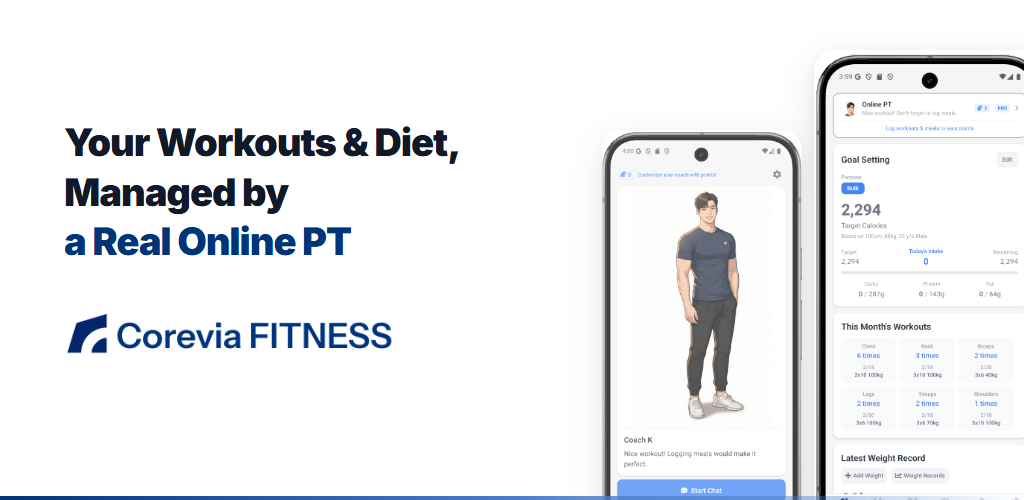
Start your healthy journey with CoreVia Fitness
AI-powered meal tracking, personalized coaching, and more — all in one app.